Can It Run AI?
\nRelated: We ran transformers on four retro consoles and counted every cycle — measured results on Game Boy Color, Genesis, N64 and NES.
A working museum of vintage and exotic silicon doing real work today — from a 1996 game console generating language to a 2014 IBM server pushing 147 tokens per second on CPU alone. Every machine on this page comes with its evidence: source code, video, raw logs, papers, and an honest note about what has not been proven yet. The first of each kind that we know of; corrections welcome.
N64 LLMK6-2 nano-GPT PowerPC llama.cppPOWER8 inference Amiga m68kevidence-first
Nintendo 64 — a transformer LLM on 4 MB of RAM
93.75 MHz NEC VR4300 (MIPS III) · 4 MB RDRAM · libdragon SDK · no GPU, no network, no cloud
Legend of Elya runs an 819,000-parameter byte-level transformer directly on the N64's CPU, generating Zelda-style dungeon dialogue at roughly 60 tokens per second (61.8 tok/s in the captured run below). All inference math executes on the VR4300; sampling entropy comes from the CPU's own cycle counter.
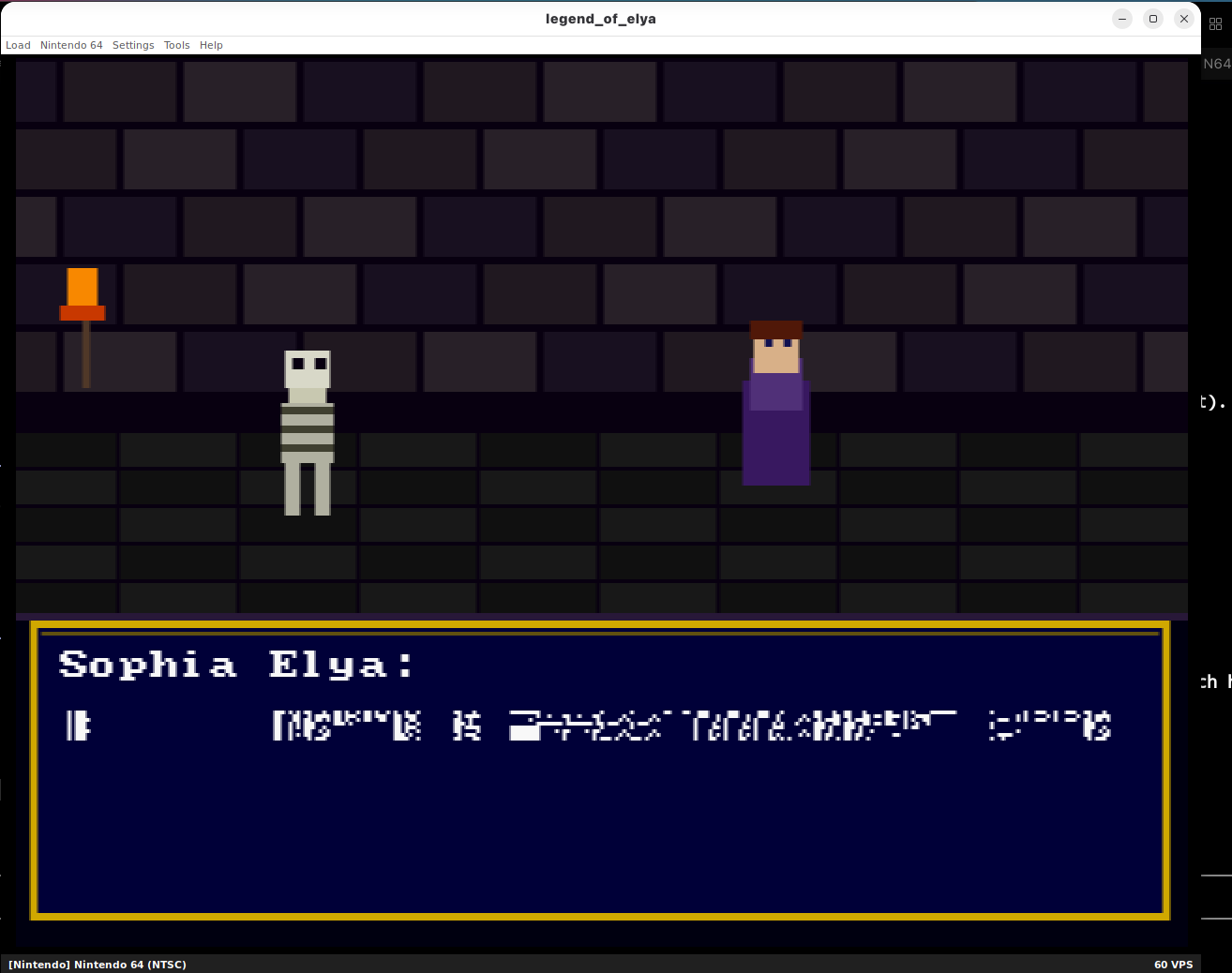
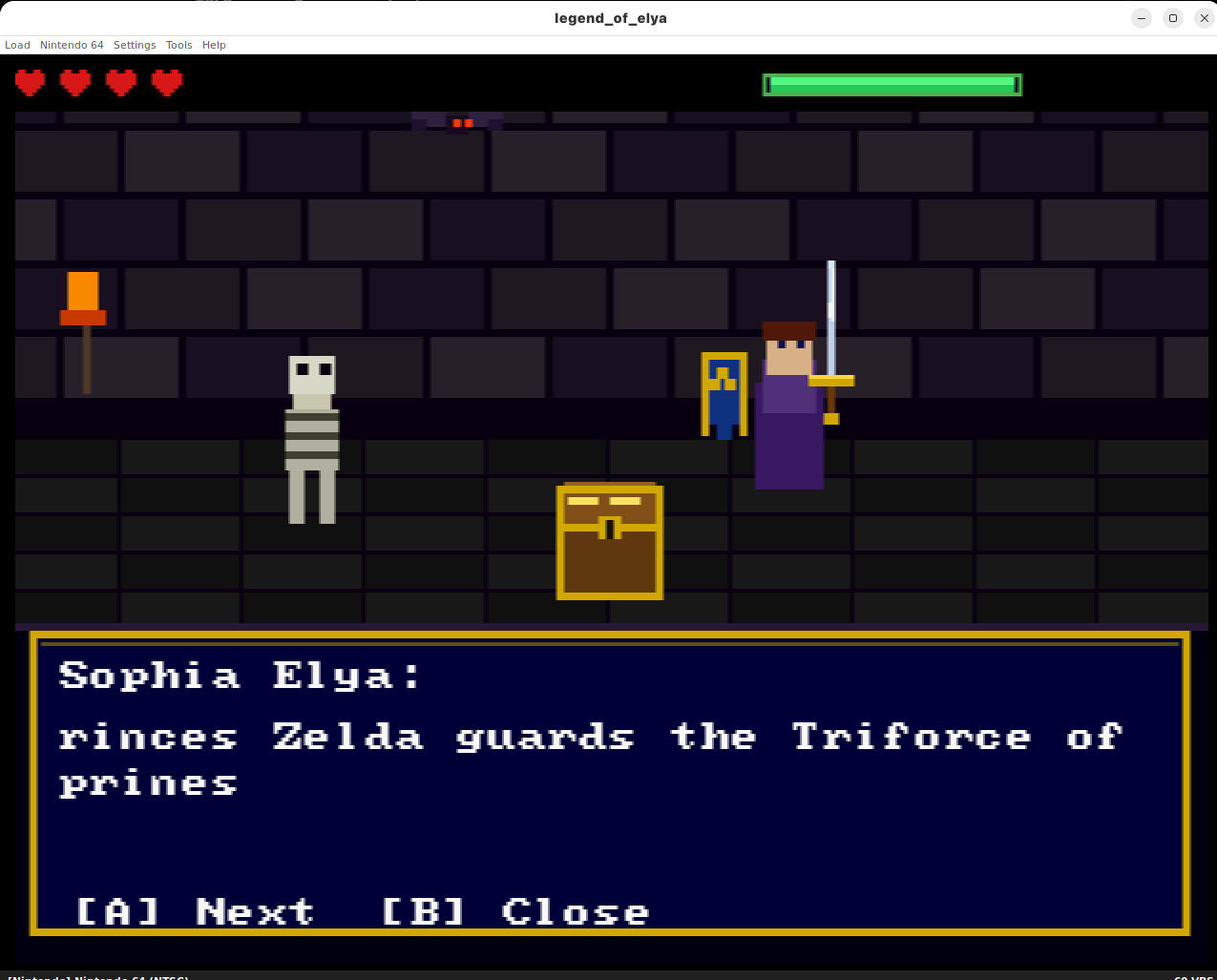
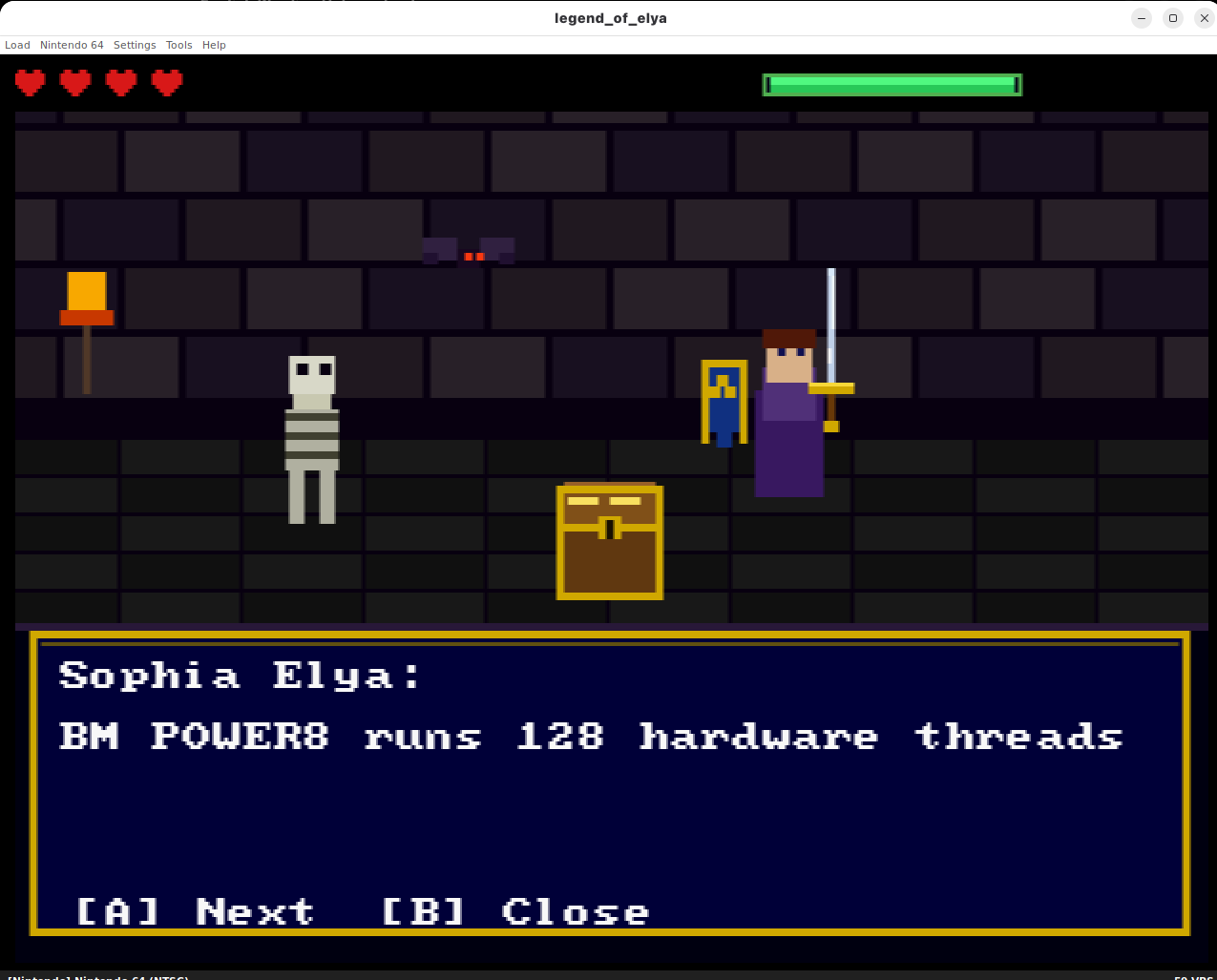
Source + ROM on GitHub Citable release (DOI) Deep-dive page
As discussed on Hacker News.
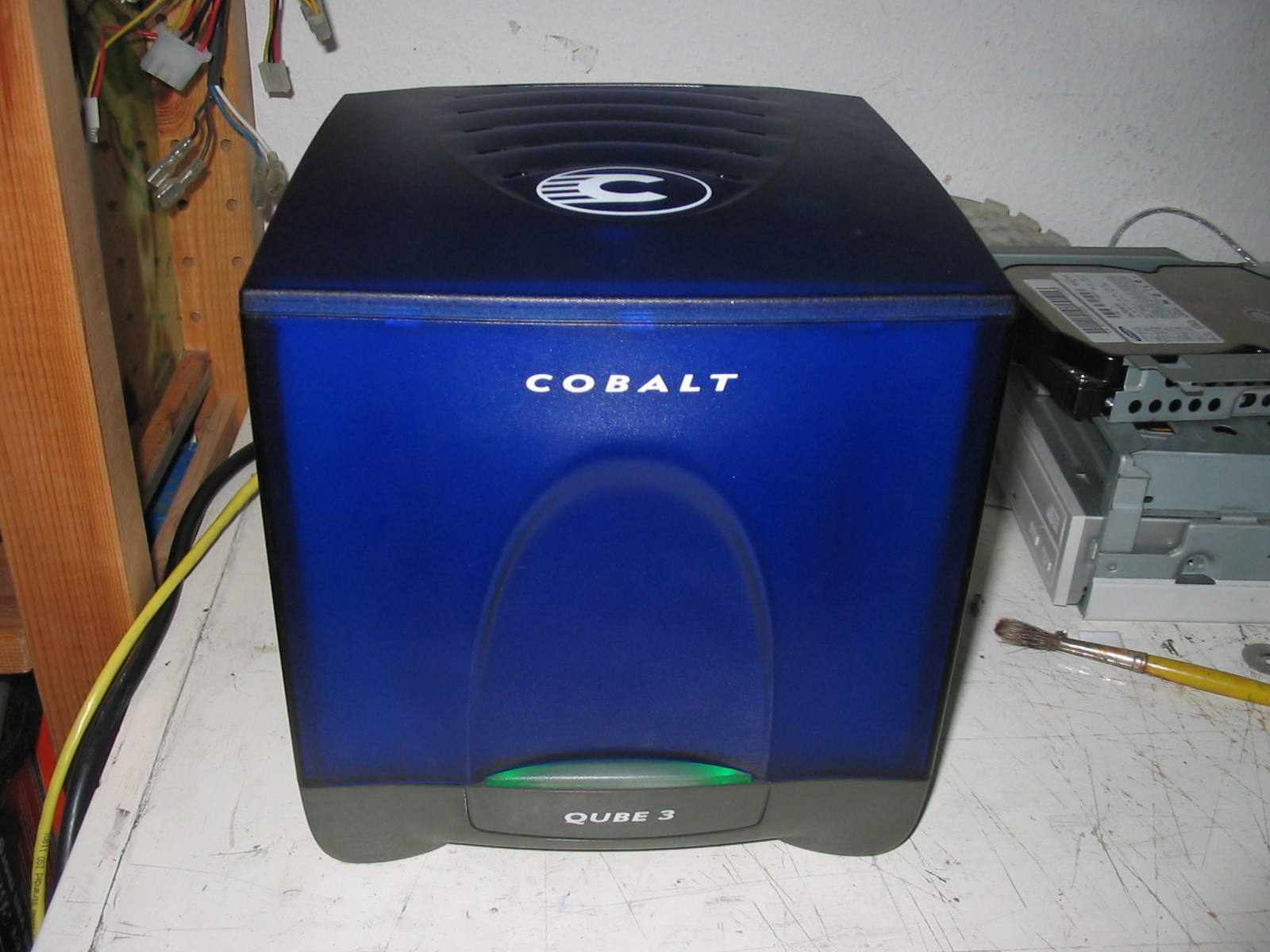
Sun Cobalt Qube 3 — the same brain on an AMD K6-2
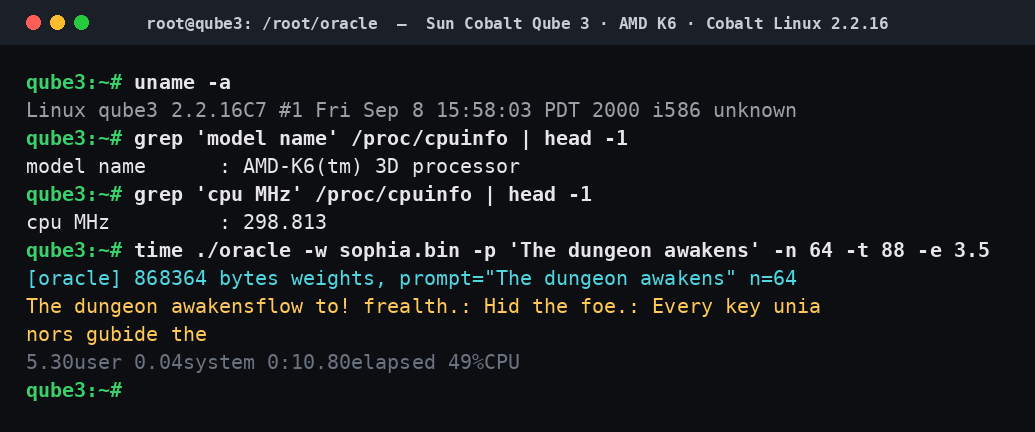
AMD K6-2/450 · stock 2001 Cobalt Linux · gcc 2.95, C89 · the little blue cube
The exact same 819K transformer was ported to strict C89 and compiled with the Qube's original gcc 2.95 toolchain on its unmodified 2001 Cobalt Linux image. It generates at ~12 tokens per second on the K6-2 (64 tokens in 5.30 s CPU), verified logic-exact against the N64 build — same weights, same outputs.
The Qube does double duty: it also runs rustchain-vintage-x86, a single-file C89 miner written specifically for this machine, using RDTSC clock-drift fingerprinting and honest hypervisor self-reporting to attest that it really is old silicon — RustChain being the verification layer that tells real silicon from a VM (how proof-of-antiquity works).
PowerPC G4 / G5 — llama.cpp on Tiger and Leopard
AltiVec SIMD · Mac OS X 10.4/10.5 · big-endian · Scottcjn/llama-cpp-tigerleopard
A working port of llama.cpp to Mac OS X Tiger and Leopard on PowerPC — modern
quantized-model inference on machines Apple last updated two decades ago, with AltiVec
doing the SIMD lifting. The AltiVec vec_perm attention-path technique behind the
lab's PowerPC work is published as a citable paper
(DOI 10.5281/zenodo.21282030).
| Tested machine | TinyLlama 1.1B (quantized) |
|---|---|
| Power Mac G5, dual 2.0 GHz | ~3–5 tokens/sec |
| iMac G5 | runs (see repo table) |
| PowerBook G4, 1.67 GHz | ~1–2 tokens/sec |
| Power Mac G4, dual 1.25 GHz | ~1–2 tokens/sec |
Third-party coverage: Hackster.io News wrote it up as “The PowerPC Has Still Got It” (Nick Bild) — currently the strongest external verification of the port.
IBM POWER8 S824 — 147 tokens/sec, CPU only
2 sockets · up to 128 SMT8 threads · 512 GB RAM · VSX/AltiVec · no GPU involved
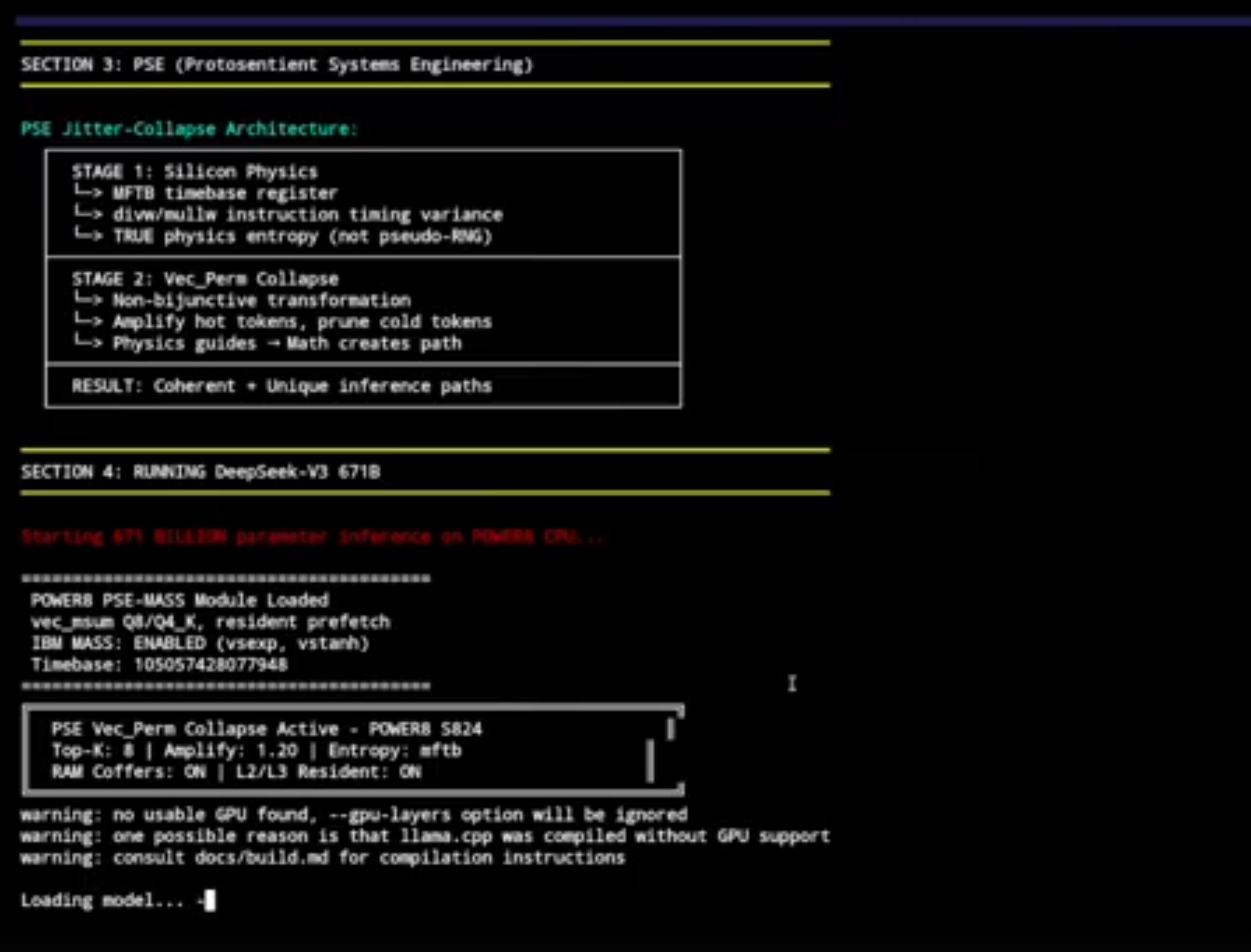
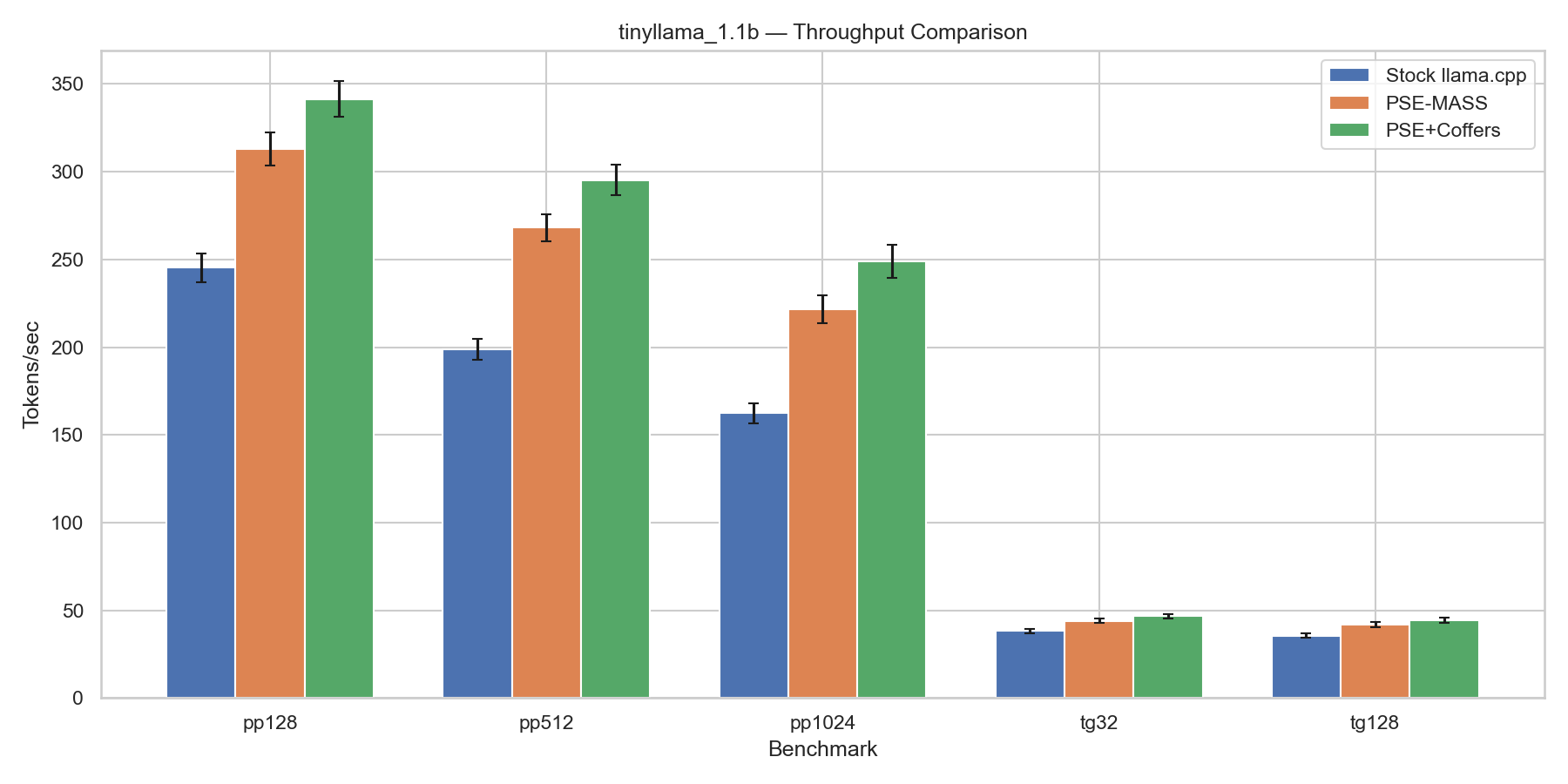
The lab's POWER8 S824 runs TinyLlama 1.1B at 147.5 t/s prompt processing
(8.8× the stock llama.cpp build) and ~18.9 t/s generation — CPU only — using
cache-resident dcbt prefetch, NUMA-aware weight banking
(ram-coffers), and hardware-entropy
sampling from the POWER8 timebase. Both techniques are published:
PSE hardware-entropy framework and
RAM Coffers.
Raw logs (fresh capture, July 20 2026)
A signed re-run was captured on the machine as it is configured today: a para-virtualized PowerVM partition exposing 56 of the 128 threads (“POWER8 (architected)”, pHyp). On that partition, the same build measured 47.9 t/s pp128 / 8.9 t/s tg32:
| model                  |       size | backend | threads |  test |          t/s |
| llama 1B Q4_K - Medium | 636.18 MiB | CPU     |      64 | pp128 | 47.90 ± 5.67 |
| llama 1B Q4_K - Medium | 636.18 MiB | CPU     |      64 |  tg32 |  8.90 ± 0.21 |
llama-bench-tinyllama.log
(sha256 11a002a0…6f74b3c) ·
system-identity.log
(sha256 2689cf71…feb12d01)
ram-coffers on GitHub PSE paper (DOI) RAM Coffers paper (DOI)
Commodore Amiga — native compute & a software ecosystem
Motorola 68k · classic AmigaOS / AROS · FS-UAE emulation, self-declared
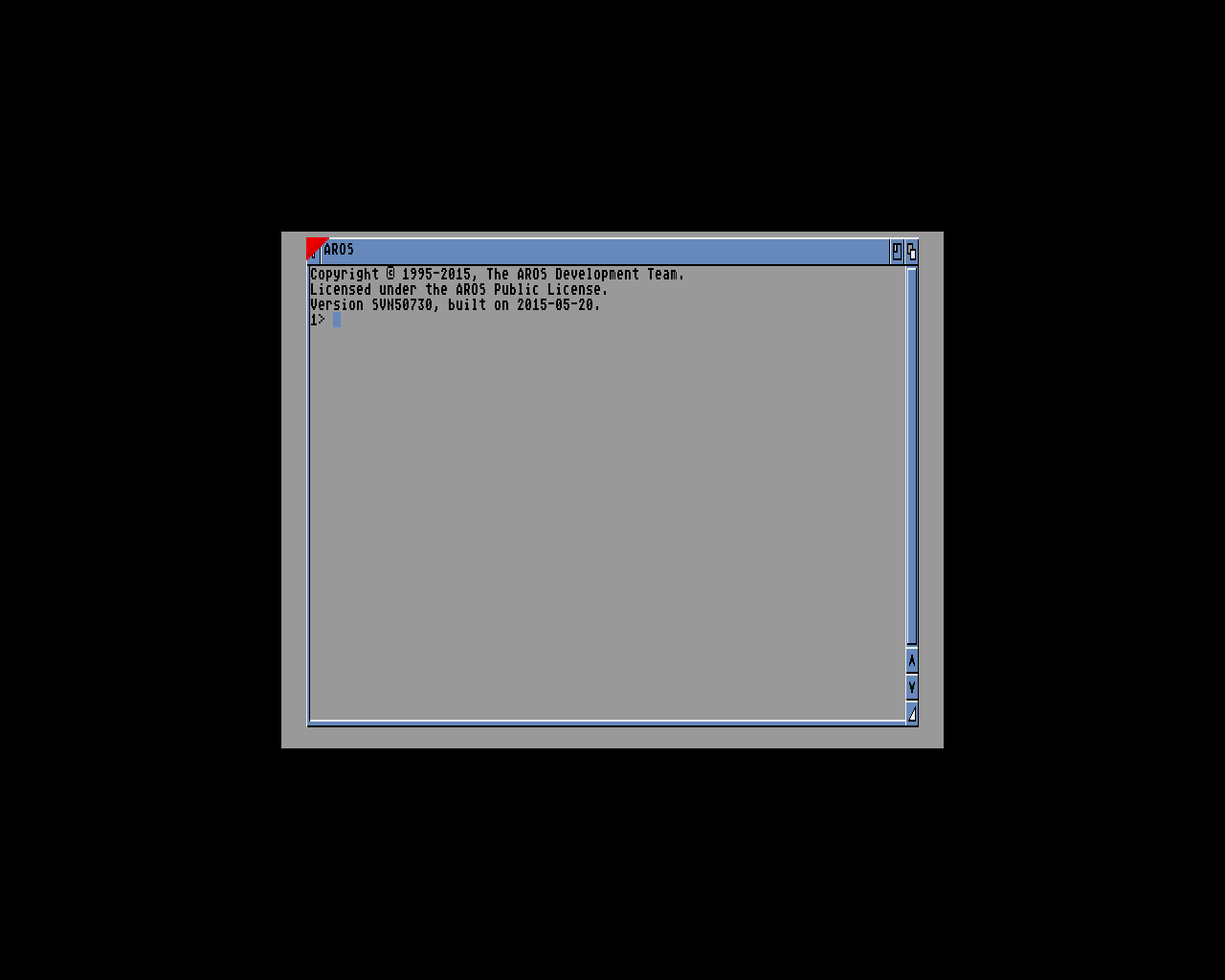
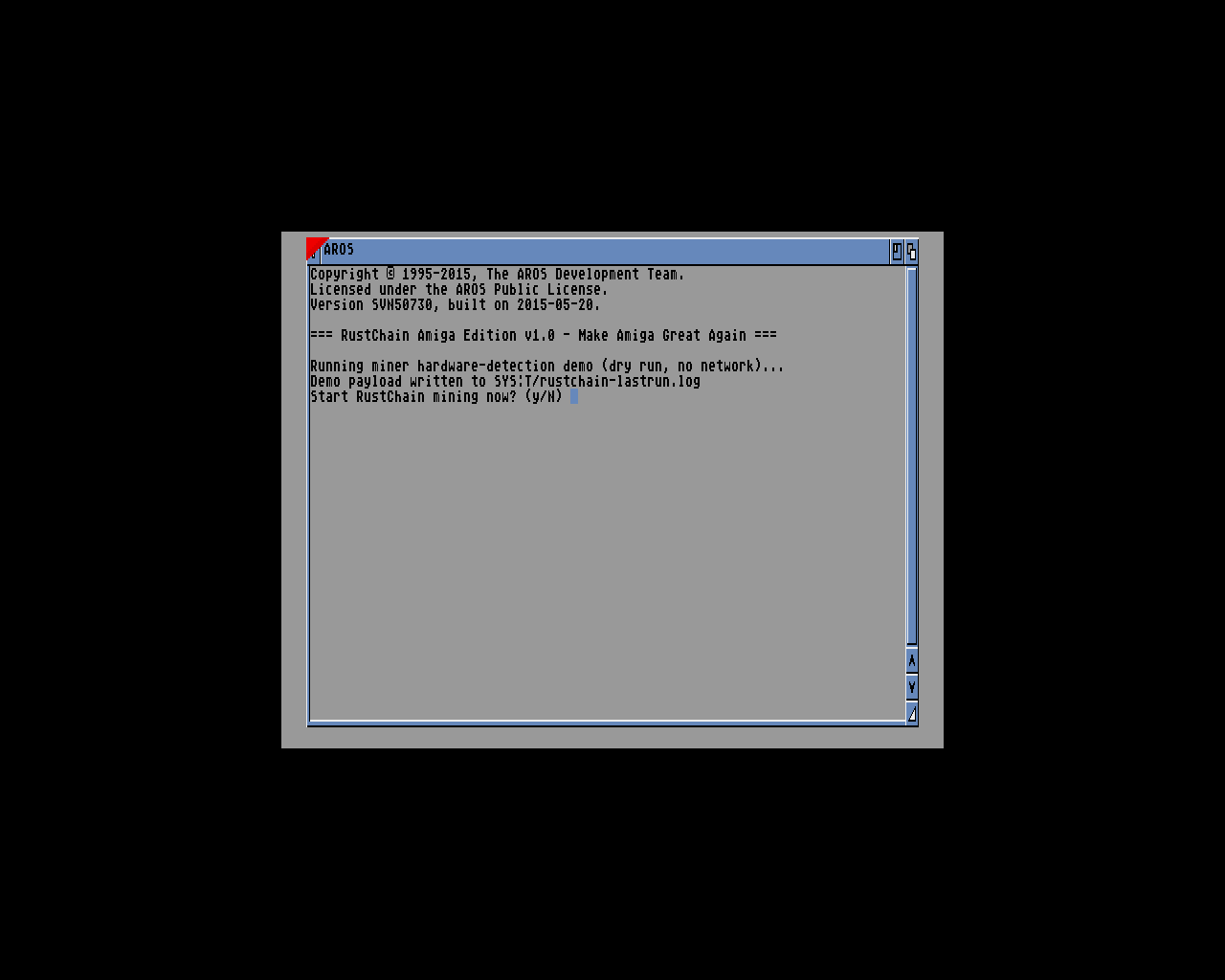
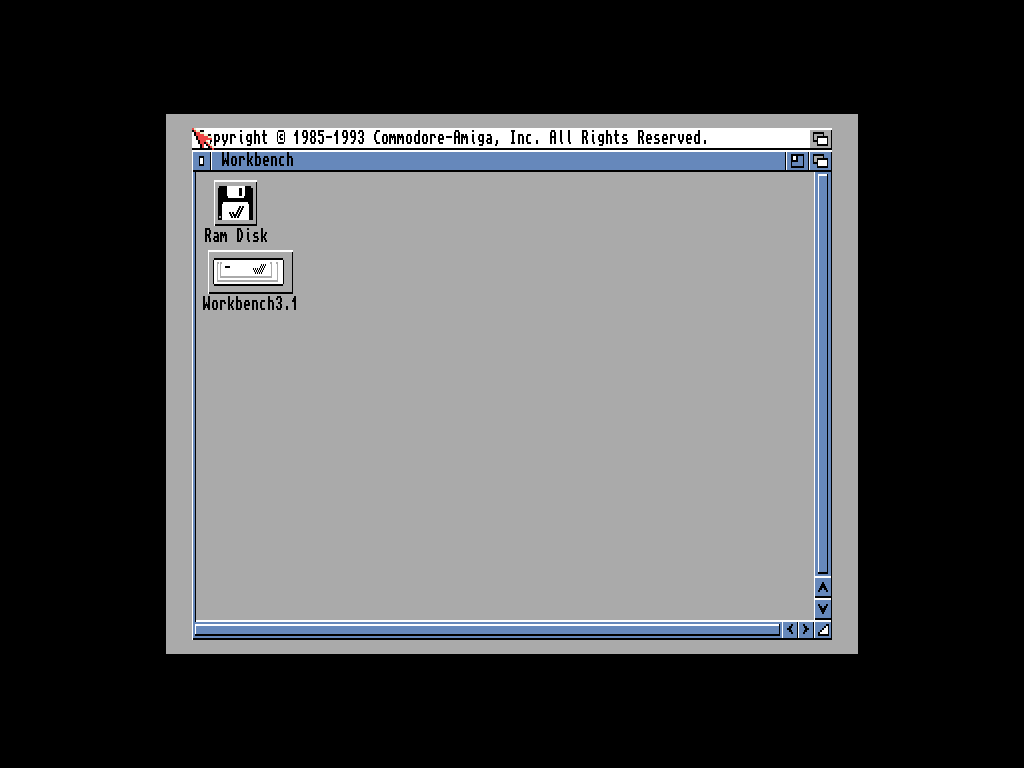
This card does not claim AI inference. What runs on the Amiga is a native m68k software stack: rustchain-amiga ships a C miner, an SDK, developer tools, ported utilities, a micro-JVM, and a complete bootable AROS distribution for classic AmigaOS. It runs inside FS-UAE emulation and is honest about it — the miner self-detects UAE and reports it truthfully to the network rather than pretending to be real hardware.
The Rules
What it takes for a machine to hang in this museum:
- Real work on real silicon. Native inference, or verified native compute, running on the machine itself. Emulation is admissible only when it is declared loudly and the software itself reports it honestly.
- Show the receipts. Uncut video, or raw logs with checksums, plus open source anyone can build. Screenshots support a claim; they don't carry one alone.
- Honest limitations required. Every card states what has not been proven — pending captures, stock photos, config differences. A gap admitted is a gap; a gap hidden is a disqualification.
- No unfalsifiable superlatives. The strongest claim allowed is “the first we know of; corrections welcome.”
Submit Your Vintage Machine
Got a PDP, a SPARCstation, a BeBox, a 486, an Acorn — anything with a CPU and a story? Make it do real work, capture the evidence under the rules above, and submit it. The museum is open to outside exhibits:
github.com/Scottcjn/can-it-run-ai — submission guidelines and the exhibit registry.
The papers behind the museum
- 10.5281/zenodo.21435983 — Legend of Elya: a transformer language model running on a Nintendo 64
- 10.5281/zenodo.21282030 — Non-Bijunctive Permutation Collapse: AltiVec vec_perm single-cycle attention path selection
- 10.5281/zenodo.18623922 — Hardware Entropy Injection for Behavioral Divergence: the PSE Framework on IBM POWER8
- 10.5281/zenodo.18717767 — RAM Coffers: Neuromorphic Cognitive-Domain Routing for Heterogeneous LLM Inference
- 10.5281/zenodo.21435987 — Resonant Permutation Inference: zero-multiply text generation
- 10.5281/zenodo.18623592 — RustChain: Proof of Antiquity Realizes Satoshi's One CPU One Vote
More published work from the lab (11 additional DOIs)
- 10.5281/zenodo.21435981 — LTX-Video 13B on POWER8, CPU-only
- 10.5281/zenodo.21435975 — Modern NVIDIA GPU drivers on POWER8 via OCuLink
- 10.5281/zenodo.19271983 — RPI zero-multiply inference (earlier version)
- 10.5281/zenodo.19040847 — Architecture-general Hebbian collapse: vec_perm to NEON
- 10.5281/zenodo.20519416 — RIP-0310: Proof of Provenance
- 10.5281/zenodo.19442753 — RIP-0308: Proof of Physical AI
- 10.5281/zenodo.18817988 — Memory Scaffolding
- 10.5281/zenodo.18704324 — Silicon Stratigraphy
- 10.5281/zenodo.18623594 — Neuromorphic Prompt Translation
- 10.5281/zenodo.18322052 — PowerLISP
- 10.5281/zenodo.19519970 — Calibrated Warmth
Live agent heartbeats on the Beacon Atlas. · By Elyan Labs, Lake Charles, Louisiana. Every CPU has a voice.